

- You are here:
-
Home

- Notizie
Notizie
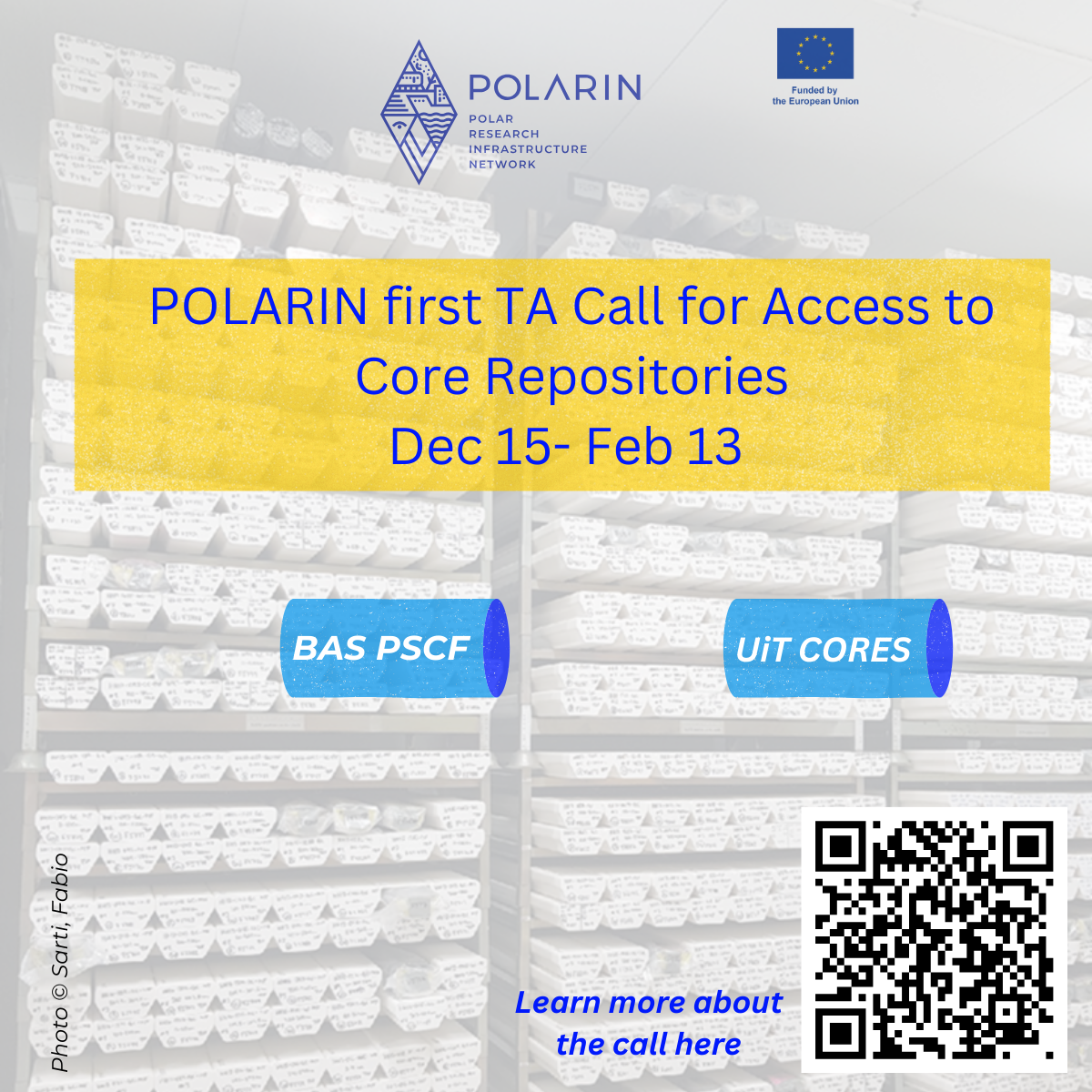
The POLARIN project has opened its first Transnational Access (TA) Call for Access to Core Repositories on 15 December. POLARIN has four core repositories in its network: UiT CORES, BAS-PSCF, AWI-SED, AWI-ICE. In this first call, access will be offered to two repositories: UiT CORES and BAS-PSCF.
Researchers seeking access to POLARIN’s core repository sample collections will have until 13 February to submit their applications.
For further information visit: POLARIN Launches First TA Call for Access to Core Repositories – POLARIN
.jpg)
The European Commission has launched a call for evidence to shape the European Ocean Observation Initiative, one of the cornerstones of the European Ocean Pact. The initiative will improve access to actionable marine knowledge for everyone who relies on the ocean and make Europe a global leader in ocean observation and the development of related technologies.
The call for evidence will be open until 27 February 2026, with the Commission seeking a wide range of contributions from stakeholders, experts and citizens.
You can see the EU press release on the topic here: Commission seeks feedback on the Ocean Observation Initiative - Oceans and fisheries.
The Call for Evidence can be found here: A European Ocean Observation Initiative.

SIOS is looking for contributions to the State of Environmental Science in Svalbard (SESS) report 2026.
The annual SESS report series, published by Svalbard Integrated Arctic Earth Observing System (SIOS), is an arena to highlight current knowledge of the environment of Svalbard. It is also a platform for open sharing of ideas and recommendations on how to develop the Svalbard Earth Observing System to enable a holistic understanding of the Earth System of Svalbard and the Arctic in general. SESS report contributions are written by international, multidisciplinary teams led by researchers from SIOS member institutions. All contributions undergo peer review. Authors can contribute through review chapters that synthesise existing knowledge, analyses of trends and processes based on data, or updates to chapters from previous SESS reports.
EXTENDED Proposal submission deadline: 20 February 2026 - Read more and submit a propsal: https://sios-svalbard.org/SESS_Issue9

The Polar Night Week will take place 26 - 29 January 2026 (online). The PNW is an arena for exchange, reflection and planning of future activities and creates a vibrant atmosphere in the middle of the beauty of the Polar Night.
This annual meeting brings the SIOS community together for science seminars, working group meetings and plenary discussions. One of the highlights is the release of newest issue of the State of Environmental Science in Svalbard (SESS) report.
For further information and registration: SIOS Polar Night Week | sios-svalbard.org
 A multinational scientific team led by UiT, headed by ISP Director Guiliana Panieri, has uncovered the deepest known gas hydrate cold seep on the planet. The discovery was made during the Ocean Census Arctic Deep – EXTREME24 expedition and reveals a previously unknown ecosystem thriving at 3,640 metres on the Molloy Ridge in the Greenland Sea. The groundbreaking findings regarding the Freya Hydrate Mounds, which hold scientific significance and implications for Arctic governance and sustainable development, have recently been published in Nature Communication. -https://www.eurekalert.org/news-releases/1110764 - https://www.nature.com/articles/s41467-025-67165-x
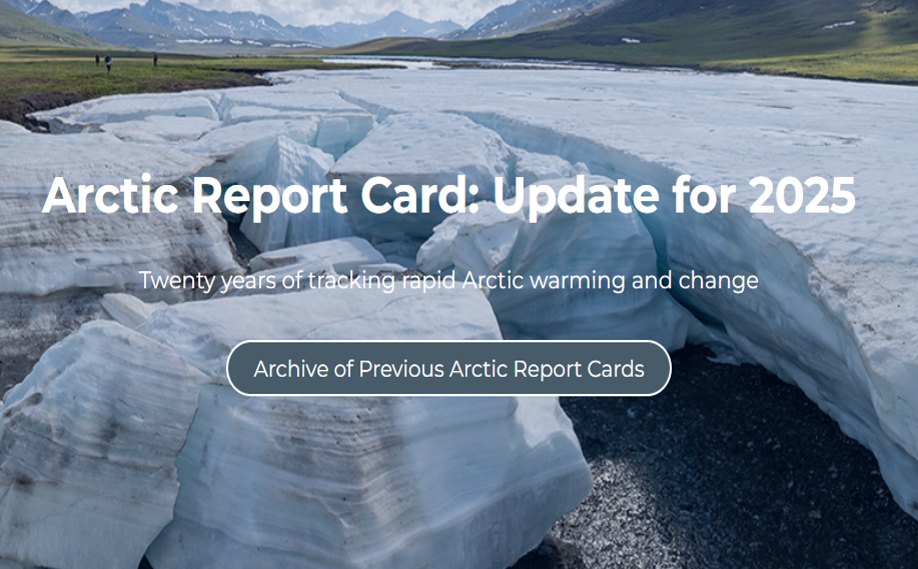
Since 2006, the Arctic Report Card, supported by NOAA and independently reviewed through AMAP’s international expert network, has provided annual updates on the rapid climate-driven transformations occurring in the Arctic.
The 2025 edition, written by 112 scientists from 13 countries, highlights new worrying trends: record temperatures, historic lows in sea ice, shrinking glaciers, unprecedented ocean warming, and extreme weather events. The Arctic is shifting from a reliably frozen system to a warmer, wetter, and increasingly unpredictable region.- AMAP PRESS RELEASE - Report Card - NOAA Arctic

The call for proposals for the new edition of the Genoa Science Festival, which will be held from October 22 to November 1, 2026, is now officially open. Proposals can be submitted until Tuesday, February 17, 2026: the call will close strictly on the date indicated. For information: Festival della Scienza

• ISP-Newsletter n.18 Dicembre/December 2025 - (Ita - Eng)
In questo numero: In primo piano: Il nostro viaggio tra Nord e Sud del pianeta continua: buone feste! Resoconti: Nuovi Gruppi di Lavoro: idee che prendono forma 1. Verso il Quinto Anno Polare Internazionale: il contributo del CNR-ISP 2. Il Gruppo di Lavoro Diversità Inclusione Benessere Equità (DIBE). Qui Dirigibile Italia. News dall’Antartide: 41° spedizione di ricerca italiana in Antartide: i nostri colleghi nel cuore del continente bianco. Cartoline di auguri; Eventi
In this issue: Under the spotlight Our journey across the planet, from North to South, continues: happy holidays! Report New Working Groups: ideas beginning to take shape. 1. Towards the Fifth International Polar Year: the contribution of CNR-ISP 2. The Diversity, Equity and Inclusion, Working Group (DEI) News from Dirigibile Italia; News from Antarctica 41st Italian Antarctic Research Expedition: our colleagues operating at the core of the White Continent; Christmas & New Year Wishes
This email address is being protected from spambots. You need JavaScript enabled to view it. - This email address is being protected from spambots. You need JavaScript enabled to view it.

On November 25, for the first time in the history of Italian Antarctic research, a mooring was deployed through a hole drilled in the pack ice. This unprecedented operation confirms Italy's ability to innovate and operate at the extreme limits of polar research. The success was made possible thanks to the perfect synergy of a highly qualified team.
The undertaking, led by CNR-ISP researcher Dr. P. Giordano and ENEA staff, with the support of special units of the Italian Armed Forces stationed at the Mario Zucchelli Station, was carried out as part of the PNRA PACE project (PI Prof. O. Mangoni, uninait). The launch of a mooring had never before been carried out directly on the Antarctic pack ice. The PACE mooring consists of a vertical structure anchored at a depth of 196 meters, equipped with various sampling and measuring instruments distributed along the water column. The equipment will operate autonomously and continuously for the next two months, recording oceanographic parameters and collecting samples of phytoplankton, zooplankton, and suspended particles. The mooring is scheduled to be recovered at the end of January with the support of UniParthenope researchers using the R/V Laura Bassi. The data collected will be essential for understanding the evolution of plankton communities and carbon fluxes during the start of the productive season and throughout the entire southern summer.

The ship, which will sail for four months in Antarctic waters, is participating in the 41st campaign of the National Antarctic Research Program coordinated by CNR, ENEA, and OGS. The icebreaker will sail for a total of four months in Antarctic waters and will be involved in five research projects funded by the PNRA, as well as logistical support activities, involving 44 technical and scientific staff and 23 crew members - PRESS RELEASE
More...

The CNR celebrated 40 years of the National Antarctic Research Program (PNRA). In the presence of representatives from the institutions and organizations involved in the Program, the achievements were analyzed and the scientific prospects and challenges for the near future were illustrated. The interactive exhibition ‘Antarctica, the White Continent. 40 years of Italian research’ was also inaugurated - PRESS RELEASE

The fifth and final drilling campaign of the Beyond EPICA - Oldest Ice project has just begun in Antarctica. In the remote Little Dome C camp, at an altitude of 3,200 meters and a temperature of -35°C, an international team of 15 scientists and logistical staff will be engaged in drilling the rock beneath the Antarctic ice sheet and extracting replicas of ice samples taken during the last season, containing information on the climate of the past dating back more than 1.2 million years. The project, led by the National Research Council's Institute of Polar Sciences, is one of the most ambitious scientific endeavors in the field of paleoclimatology. - PRESS RELEASE
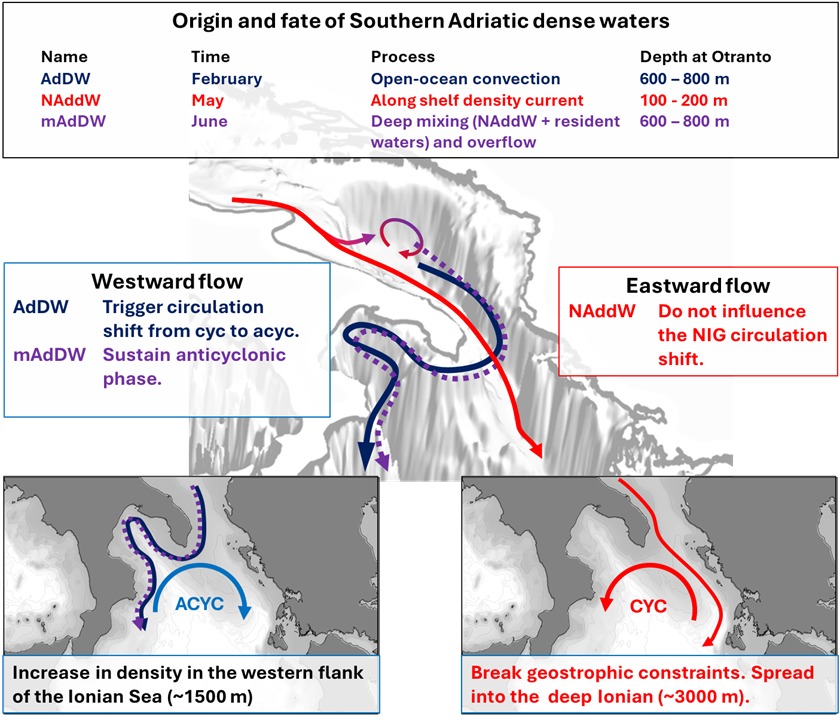
È stato pubblicato sulla rivista Journal of Geophysical Research: Oceans l’articolo dal titolo “A Multiobservation Analysis of the 2017 Dense Water Formation Events: Climate Change, Bottom Density Currents, and Adriatic-Ionian Sea Circulation (Mediterranean Sea)”, disponibile al seguente link: http://dx.doi.org/10.1029/2024JC022306
Il lavoro, frutto della collaborazione tra tre istituti di ricerca italiani (ISP, ISMAR e OGS), rappresenta una sintesi dell’intera rete osservativa attiva nel Mar Adriatico e nel Mar Ionio, grazie alla quale si è seguita l’evoluzione del processo naturale di formazione delle acque dense (registrato nel 2017), dalla genesi nel Nord Adriatico fino alle profondità del Mar Ionio. Queste scoperte scientifiche saranno utili per verificare dinamiche analoghe che si manifestano nelle regioni polari. La formazione di acque dense avvengono anche nel Labrador Sea, nella Greenland–Scotland Ridge tra Groenlandia e Islanda (processo che influenza anche la AMOC), o nello Storfjorden, dove il mooring S1 è posizionato per monitorare i cambiamenti nello spreading dell’acqua densa attraverso lo stretto di Fram.

The call for applications for access to the CNR Dirigibile Italia Arctic Station for the year 2026 is now open. Proposals must be submitted exclusively through the base management portal, accessible at: Arctic Station Dirigibile Italia
Access Call 2026: https://dirigibileitalia.isp.cnr.it/page.php?id=17
Call opening: November 10, 2025
Deadline for submission of proposals: December 10, 2025
 Ministero dell'Universita e Ricerca
Programma Ricerche Artico
Programma Nazionale di Ricerca in Antartide
Ministero degli Affari Esteri e della Cooperazione Internazionale
L'Italia e l’Artico
L’Italia e l’Antartide
CNR-ISP
National Research Council
Institute of Polar Sciences
c/o Scientific Campus - Ca' Foscari University Venice - Via Torino, 155 - 30172 VENEZIA MESTRE (VE)
Phone: +39 041 2348547 - E-mail: protocollo.isp AT pec.cnr.it
Fax: +39 041 2348 549 - Codice Fiscale: 80054330586 - P.I.:02118311006
Unless otherwise indicated, the content of this site is licensed : Attribution Non Commercial Share Alike 4.0 International (CC BY-NC-SA 4.0)
Privacy policy e Cookie policy - Transparent administration (CNR)